








How does accountability form?
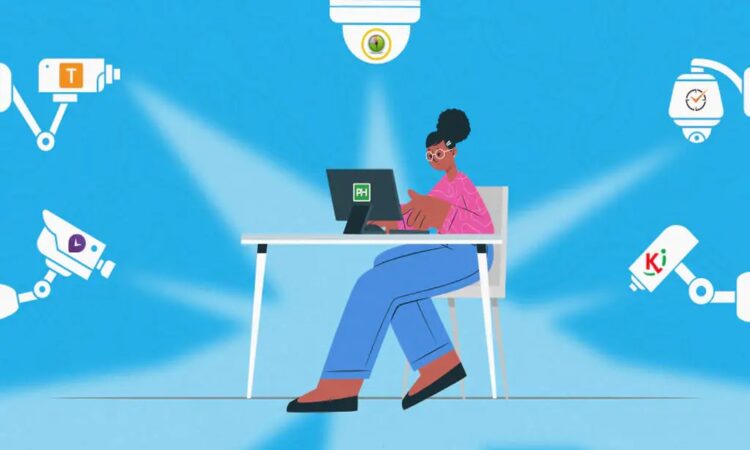
Accountability in a workforce does not form through constant supervision. It forms when people understand that their work activity is documented and that the record exists, regardless of whether a manager is actively watching. That distinction matters more in remote and hybrid environments where direct observation is not possible, and HR managers need another mechanism to maintain visibility across dispersed teams.
Micromanagement quietly drains the people doing it. Hours go into following up on work that was probably fine, while the conversations worth having get pushed aside. click here for more info on how monitoring software creates structured visibility without placing managers in the position of tracking every individual action manually. Staff notice when oversight feels personal rather than procedural, and that changes how they engage with the work itself. A documented system sitting quietly in the background changes that dynamic entirely.
Does structure replace supervision?
Structure replaces supervision when the system captures what supervision would otherwise need to observe manually. Monitoring software does exactly that. Session logs, attendance records, and activity patterns accumulate without any manager needing to request them, check in repeatedly, or follow up with individual staff members to confirm work is progressing.
HR managers working across multiple teams benefit from this most directly. Rather than dividing attention across every individual, attention goes where the data points. A team member whose logs show consistent output requires no intervention. One whose patterns shift noticeably gives HR a documented starting point for a conversation grounded in record rather than perception.
Data informs decisions
When activity gets captured consistently, decisions about workload, scheduling, and performance stop relying on memory or informal observation. The data exists independently of how well a manager remembers a particular week or how clearly a staff member communicates their own output.
Team leaders find this especially useful during performance cycles. Rather than reconstructing what happened over the past quarter from emails and self-assessments, documented logs provide a factual foundation that makes evaluations more accurate and discussions less contentious for everyone involved. Check-ins get shorter because the information already exists. Managers arrive at those conversations with context rather than questions.
Autonomy stays intact
Staff autonomy holds up when nobody is asking them to account for every hour out loud. Logged activity handles that quietly. No update requests, no check-in schedules, no justification conversations that put people on the defensive before anything has actually gone wrong.
For business owners building remote teams where trust and output both matter, this balance is what makes workforce monitoring genuinely useful. Staff work without interruption. Managers maintain visibility without intrusion. HR teams hold documented records without assembling them manually. Each part of the organisation gets what it needs without the friction that direct supervision typically introduces into distributed working relationships.
Accountability built on documentation holds more steadily than accountability built on presence. Monitoring software gives organisations that foundation without asking managers to trade oversight for interference or asking staff to trade autonomy for scrutiny.